
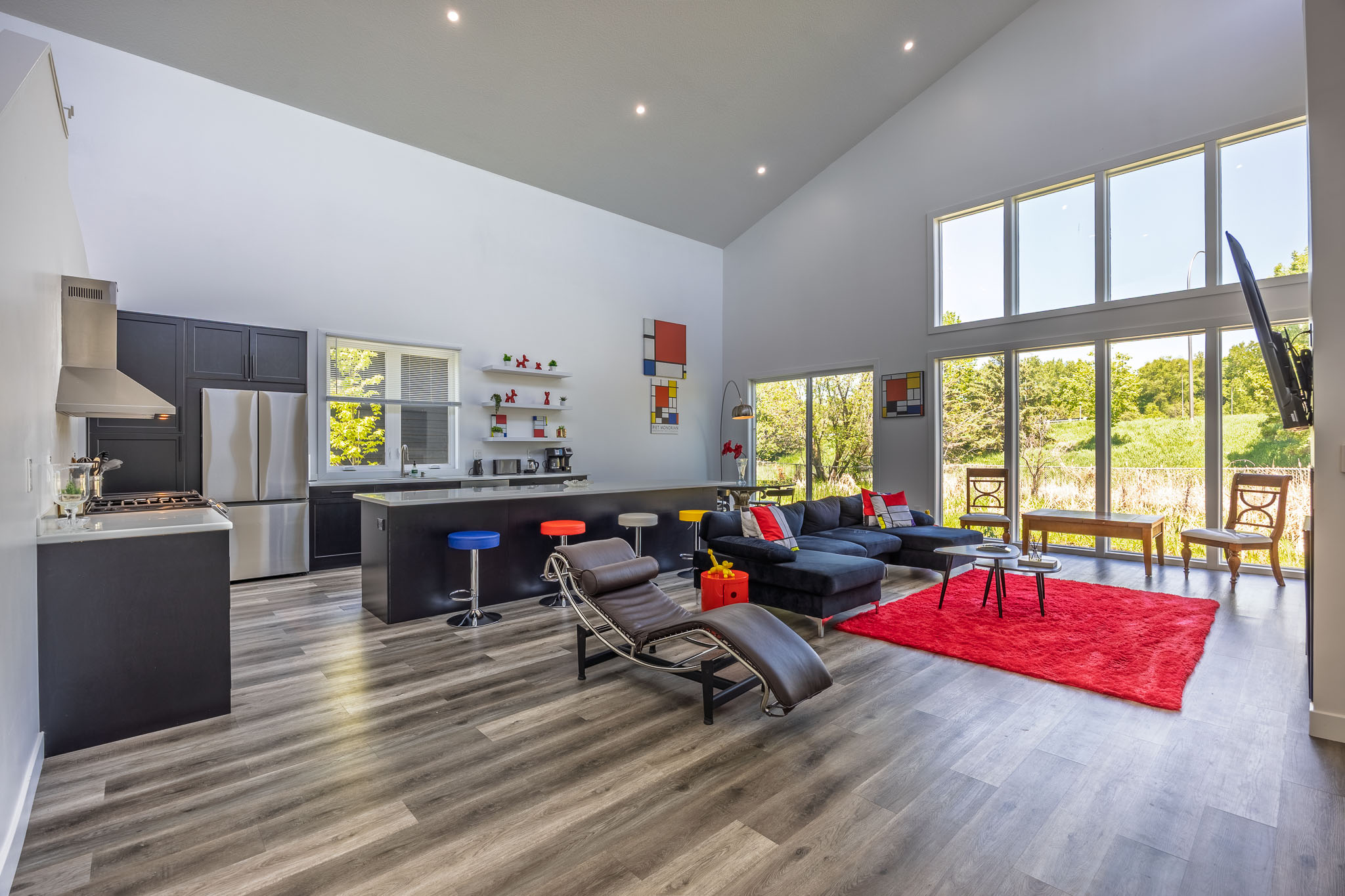
Buyers are scrolling faster than ever, and they are deciding whether a home fits their life in about the time it takes to swipe through 5 photos. But the bigger shift I am seeing in 2027 is not speed. It is trust. Buyers are starting to notice when a gallery has been run through an AI editor, and they do not like what they are seeing.
The ceilings and floors that never existed
I am hearing the same frustration from two directions. Agents are telling me their buyers are complaining after a showing. And I am seeing it directly from consumers online, in the comments and the threads where people talk about house hunting: they click into a listing, the kitchen looks flawless, the ceilings look flawless, the windows look like paintings, and then they walk the home in person and none of it matches. Some of these full gallery AI edit services do not touch up a room. They rebuild it. New floors, new ceilings, new light coming through windows that never had that light. It looks impressive on a phone screen and it sets a buyer up to feel misled the moment they walk through the front door.
That gap between the photo and the property is not a small thing. It is the first impression of the agent, before the buyer has even met them.
What natural light photography actually protects
I shoot with the light the home has. I balance exposure, correct color, straighten verticals, clean up what a professional edit should clean up. What I do not do is invent a ceiling or paint a sky into a window. The photos show the space, the light, and the condition of the home as it actually is.
That is not a limitation. It is the point.
It is a liability question, not just a style question
An agent whose listing photos do not match the property is exposed the moment a buyer notices, and buyers are noticing more every year. Natural, accurate photography is one of the simplest ways to remove that risk before it becomes a conversation with a broker or a complaint after closing.
It is also what builds the relationship
Accuracy reads as honesty. When a buyer walks into a home and it looks like the photos, that reflects on the agent who hired me, not just on me. It tells that buyer this agent does not oversell. That is the kind of trust that turns into a referral, not just a closed deal.
Light that matches the season, not fights it
Minnesota light changes hard across the year, and I work with it instead of erasing it. Soft, bright winter light instead of gray. Spring greens and clean window light. Balanced indoor and outdoor brightness in summer. Warm fall tones without pushing the saturation. A listing photographed to embrace its season reads as honest. One that fights it, or fakes it, reads as off the second a buyer sees the real thing.
Exterior and curb appeal carry more weight than ever
Buyers compare homes block by block, especially in Robbinsdale, Minnetonka, and South Minneapolis. Lot size, tree coverage, how close the neighbors sit, how the home sits on the street. A strong, well composed exterior is often the single photo deciding whether someone clicks in at all, and it needs to hold up in person.
Motion still matters
A short walkthrough clip. A speed tour under a minute. A smooth clip that shows how the spaces actually connect. Vertical video built for social. None of that requires inventing anything. It just requires showing the real flow of the home in a format buyers are already scrolling through.
Where this leaves agents
If your listings are accurate, well lit, and consistent with what a buyer sees in person, you are protecting yourself and building trust at the same time. If your gallery oversells the house, that gap becomes the agent's problem the day of the showing, not mine.
If you want listing media that holds up in real light and in person, let's talk.
Back to the blog