
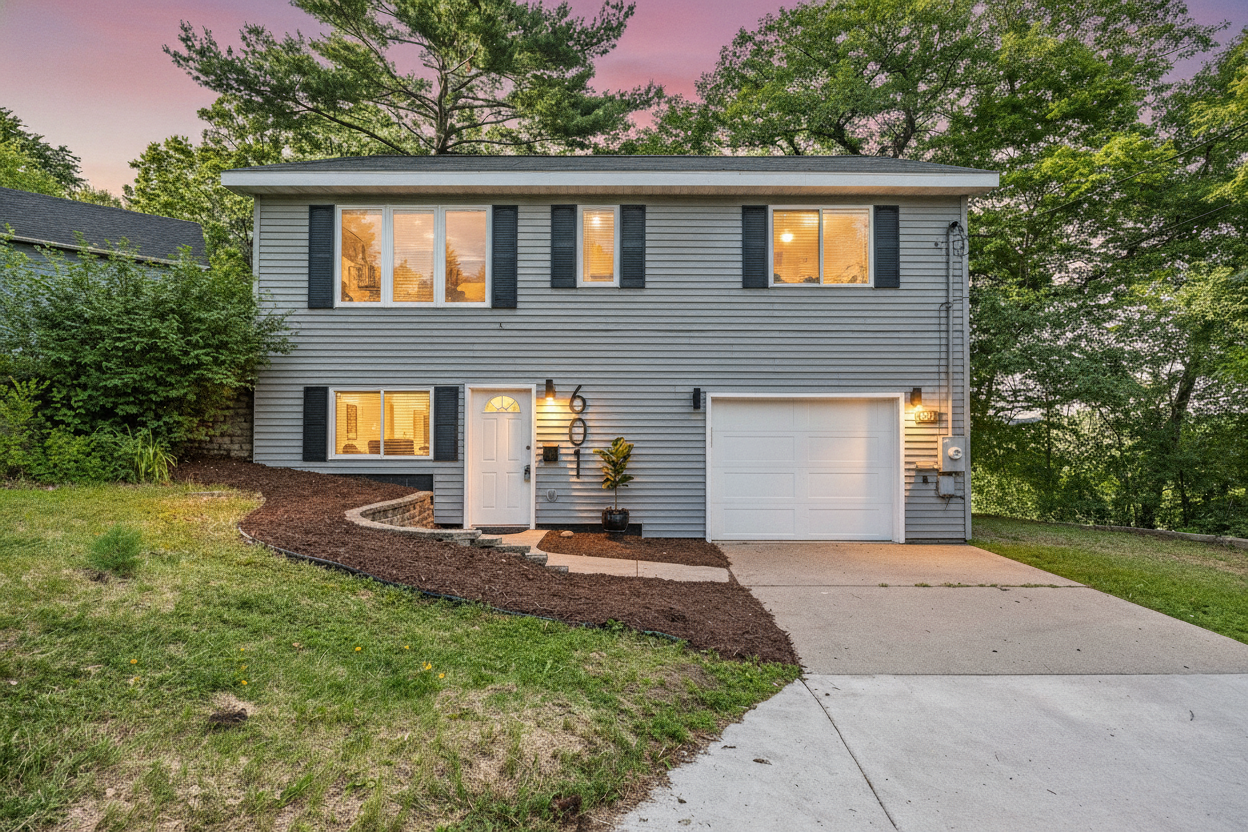
A buyer scrolling Zillow gives your listing about a second before they decide to tap or keep going. That is the whole competition. One thumbnail against a screen full of other thumbnails.
That is what people mean by the attention economy, and it is why AI showed up in real estate media so fast. Virtual staging fills an empty room. Virtual twilight turns a two o'clock exterior into golden hour. AI video turns a stills gallery into something that moves on Instagram. All of it exists to win that one second.
I use AI almost every day. I am not here to talk anyone out of it.
The part most agents do not know
AI is already in your listing photos, whether anyone told you or not.
The automated HDR services that merge bracketed exposures use it. The one click object removal tools that take a trash bin out of a driveway use it. These are standard tools across the industry, and they generate pixels that were never in the original photograph.
Most photographers and media companies use them. Almost nobody mentions it. You do not know unless you ask, so ask whoever you hire. It is a fair question.
What the rules actually say
My local MLS rules require the agent to caption each image that uses AI as "virtually staged." Per the NorthstarMLS guidelines, any photo that is virtually staged, AI generated, or AI enhanced should be identified in the caption, on the photo, or in the remarks.
Two more pieces matter. Every room shown virtually staged needs at least one unaltered image of that same room in the listing. And the alterations can only touch personal property, meaning furniture and decor. Walls, windows, flooring, and room dimensions stay exactly as they are.
California AB 723 took effect in January 2026 and requires the original unaltered photos alongside AI staged versions. Other states are paying attention.
What I teach my clients
Show the original photo first, then the virtually staged version. One room, two images, clearly labeled. It protects you, it protects the buyer, and it is the version of this that still works when a buyer walks through the front door.
Over-disclosing carries no penalty. Under-disclosing does.
Where this goes
AI in listing media is going to keep getting better and cheaper. The agents who do well with it will be the ones who are straightforward about using it, because trust is the part buyers remember after the photos have done their job.
That is why AI free editing is an option at checkout on every booking I take. Some sellers want it. Some do not. The point is that they get asked.
Are you a Twin Cities REALTOR working through AI disclosure right now? I would like to hear how you are handling it.
Read how AI free editing works before your next shoot.
Back to the blog